
Women subsidise the global economy through unpaid care work and navigating poor service delivery. Reflecting an unequal system that extracts in the same way tax systems do so in service of an elite few. Whilst representation is seen as a form of progress, it remains insufficient. Women occupying space in policy making does not always translate to substantive equality. As systems and patriarchy continue to permeate across social, governance and negotiation spaces. The sanitary pad value chain presented another layer of hierarchy within gendered inequity. Where the quality of sanitary pad products in the West is far better than those available in Kenya. Ensuring minimum wage and minimum manufacturing standards to safe costs because of poor regulatory requirements.
These were the invaluable lessons learned as African civil society convened. The importance of lived experiences and narratives that shape society are critical for policy discourse. We were reminded on how some provisions of the draft UN Tax Convention erase inequities because of the language used. For example, under pillar one, lived experiences can’t reflect because of the nuances that care, labour and dignity come with. A transformative tax convention would recognise and value all forms of women’s labour as a foundation for the global economy. This challenges the notion of value and production outside of formal economics. As it leverages the domestic, invisible and under-valued contributions of women.
Accounting standards have often been used to avoid tax and find loopholes. Creating a conflict between financial accounting and tax reporting. The first primarily concerns itself with shareholders whilst the latter focuses on national tax bodies. So, US GAAP and IFRS can present a dispute in revenue recognition and subsequently tax liability. Less tax and the more profit whilst increasing administrative regulatory efforts to ensure compliance. This is why civil society advocates for unitary taxation. An approach that hasn’t received global acceptance. A reminder of how tax remains a political issue. Whether as tariffs, levies or withholding tax, there is a need to harmonise standards and tax treatment.
I commented on the need for actuaries to speak to economists and vice versa. Given the data gaps and need for pooling together different approaches and expertise. For example, actuaries would contribute best in risk analytics, quantitative modelling and financial forecasting. My experience in the insurance sector showed how important actuaries can be in multi-jurisdictional recognition of revenue and risk in underwriting. Where big data on climate, political and economic risks are used to compliment socioeconomic and human development statistics in product development and pricing. These could be used in stress testing different tax systems and unlocking innovative capacity for African countries.
My keen interest on grassroots experiences makes these conversations more nuanced. As a conflict between [informal] trade and tax reforms could complicate cross-border economic activity. Impacting women directly. This zeroed in on how unitary tax should be reserved for multinational corporations as they would have the risk appetite, capacity and ability to move intangible assets across borders. They are the reason why tax reforms are needed, given the gendered exploitation that occurs in labour and competitiveness. This sparked the topic of mutual administrative assistance to counter multinational practices. In some regions this process could take 2 years; delaying audits and investigations. More efforts in information exchange among African countries would ease the administrative burden in tax justice.
by Dumi Gatsha
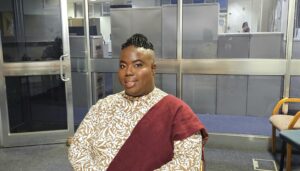
A blog series from a grassroots perspective, Dumi Gatsha unpacks and reflects on the many nuances, trends and intersectionality of leaving no one behind in Tax Justice. Advocating for the inclusion of communities that live in the margins of political will, multilateralism and formal economic participation amidst challenging socioeconomic contexts. Akina Mama wa Afrika provided support for Dumi to attend the 3rd Intergovernmental Negotiating Committee on the UN Framework Convention on International Tax Cooperation (UNFCITC)